A cervical lesion is an area of abnormal tissue found on the cervix, which is the lower end of a woman's uterus. cervical lesion treatment usually involves removal of the abnormal tissue. the goal of this type of treatment is to help prevent the abnormal cells from becoming cancerous and invading nearby normal tissue. Cervical lesion treatment usually involves removal of the abnormal tissue. the goal of this type of treatment is to help prevent the abnormal cells from becoming cancerous and invading nearby normal tissue. options for removal of a cervical lesion often include cold-knife or electrosurgical excision, cryotherapy, and laser therapy. Hsils, on the other hand, have a greater risk of turning into cancer. a diagnosis of hsil generally means the changes in the cells of the cervix are more severe and are considered precancerous. there are different levels of hsils that correspond to increasing risk of the cells becoming cancerous, ranging from a moderate risk to very likely.
Treatment. treatment for cervical cancer depends on several factors, such as the stage of the cancer, other health problems you may have and your preferences. surgery, radiation, chemotherapy or a combination of the three may be used. surgery. early-stage cervical cancer is typically treated with surgery. See more videos for cervical lesions treatment.
What is a cervical lesion? (with pictures).
Feb 28, 2018 · moderate cervical lesions -formally known as cervical intra-epithelial neoplasia grade 2 (cin2) -are abnormal cells on the surface of the cervix. cin is not cervical cancer but does have the. Noncarious cervical lesions (nccls) involve the loss of hard tissue from the cervical areas of teeth through processes unrelated to caries. nccls are nowadays a common pathology caused by changes in lifestyle and diet. the prevalence and severity of cervical wear increase with age. it is generally a. A noncarious cervical lesion (nccl) is a small sauceror notch-shaped loss of tooth structure at the cementoenamel junction that is most commonly found on the tooth’s facial surface (figure 1). these Cervical Lesions treatment lesions are not at increased risk of caries because they are generally accessible for self and professional cleaning. typically presenting in middle-age to older adults, nccl prevalence is. See full list on wisegeek. com.
What Is A Precancerous Cervical Lesion Cervical Cancer
Surveillance or observation is appropriate for some patients with low-risk lesions whereas treatment with an excisional or ablative procedure is recommended for patients with higher risk lesions. excisional treatments are referred to as cone biopsies or cervical conization and include cold knife conization, loop electrosurgical excision. Treatment of cervical premalignant lesions (cervical intraepithelial neoplasia; cin) of different grades is very effective, simple, and safe. the entire transformation zone of the cervix needs to be treated either by an ablative technique (cryotherapy or thermal ablation) or an excisional technique.
Screening tests can help detect cervical cancer and precancerous cells that may one day develop into cervical cancer. most guidelines suggest beginning screening for cervical cancer and precancerous changes at age 21. screening tests include: 1. pap test. during a pap test, your doctor scrapes and brushes cells from your cervix, which are then examined in a lab for abnormalities. a pap test can detect abnormal cells in the cervix, including cancer cells and cells that show changes that increas Make an appointment with your doctor if you have any signs or symptoms that worry you. if you're thought to have cervical cancer, you may be referred to a doctor who specializes in treating cancers that affect the female reproductive system (gynecologic oncologist). here's some information to help you get ready for your appointment and what to expect from your doctor.

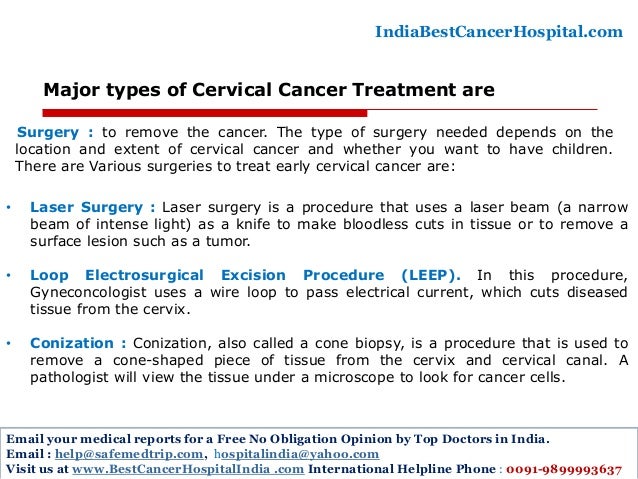
Cervical cancer cells (squamous cell carcinoma or adenocarcinoma) are sometimes found on a pap test. however, this finding is very rare for women who have been screened at regular intervals. you can learn more about cervical cancer, including staging and treatment options, in cervical cancer treatment (pdq ®). Laser treatment. the precancerous cervical lesion is destroyed with a beam of laser light. conization. a small, cone-shaped piece of tissue containing the abnormal area of the cervix is removed. Low-grade squamous intraepithelial lesion (lsil) is a common abnormal result on a pap test. it’s also known as mild dysplasia. lsil means that your cervical cells show mild abnormalities. a lsil. For both lsils and hsils, follow-up testing is often recommended to get a closer look at the abnormal cervical cells. one common follow-up test is known as a colposcopy. during a colposcopy, a health care provider looks at the cervix under magnification, and if the cervical lesion can be seen, a biopsy of it may be taken for further testing. if the biopsy results confirm or show the cervical cell changes are only mild, more frequent pap smears to continue to monitor the cells is often the only recommended course of action. a health care provider may recommend more active treatment, however, if the results confirm or show more severe changes. cervical lesion treatment usually involves removal of the abnormal tissue. the goal of this type of treatment is to help prevent the abnormal cells from becoming cancerous and invading nearby normal tissue. options for removal of a cervical lesion often include cold-knife or electrosurgical excision, cryotherapy, and laser therapy. frequent pap smears may be recommended for a certain amount of time after treatment to monitor for any additional cervical changes.
Treatment Of Cervical Intraepithelial Lesions Castle

Moderate cervical lesions -formally known as cervical intra-epithelial neoplasia grade 2 (cin2) -are abnormal cells on the surface of the cervix. cin is not cervical cancer but does have the. Precancerous cervical lesions precede the development of invasive cervical cancer by 10–20 Cervical Lesions treatment years, making cervical cancer preventable if these lesions are detected and effectively treated. treatment has evolved in the last few decades and now includes ablative options that can be performed in lower‐resource settings where surgical excision.
Treatment for cervical cancer depends on several factors, such as the stage of the cancer, other health problems you may have and your preferences. surgery, radiation, chemotherapy or a combination of the three may be used. Surgical treatments. if your doctor determines that you have a high grade cervical lesion, he or she may advise you to have the lesion removed. the two most common methods of removing cervical lesions are by procedures called a leep or cold knife cone. both procedures are quick and typically have a quick recovery time. More cervical lesions treatment images.
Precancerous Lesions In Cervical Cancer
A cervical lesion is an area of abnormal tissue found on the cervix, which is the lower end of a womans uterus. such lesions may be found during routine pap smears and can indicate the presence of infection with human papillomavirus (hpv) and/or precancerous changes in Cervical Lesions treatment the cells of the cervix. in general, a cervical lesion is classified as either low grade or high grade, which corresponds to the degree of abnormality seen in the cervical tissue. for many women diagnosed with these lesions, regular follow-up testing is recommended to monitor the degree of abnormality of the cervical tissue. in certain cases, treatment may be recommended to remove the abnormal tissue. See full list on mayoclinic. org. Proper treatment of each of these types of cervical lesions may require placement of restorations, soft tissue grafting, or both surgical and restorative treatment. treatment planning for cervical lesions is simplified by the assessment of five variables: 1) gingival dimensions; 2) depth of cervical lesion/restoration/caries; 3) depth of.